
No products in the cart.
How to Measure Your Ring Size by Yourself
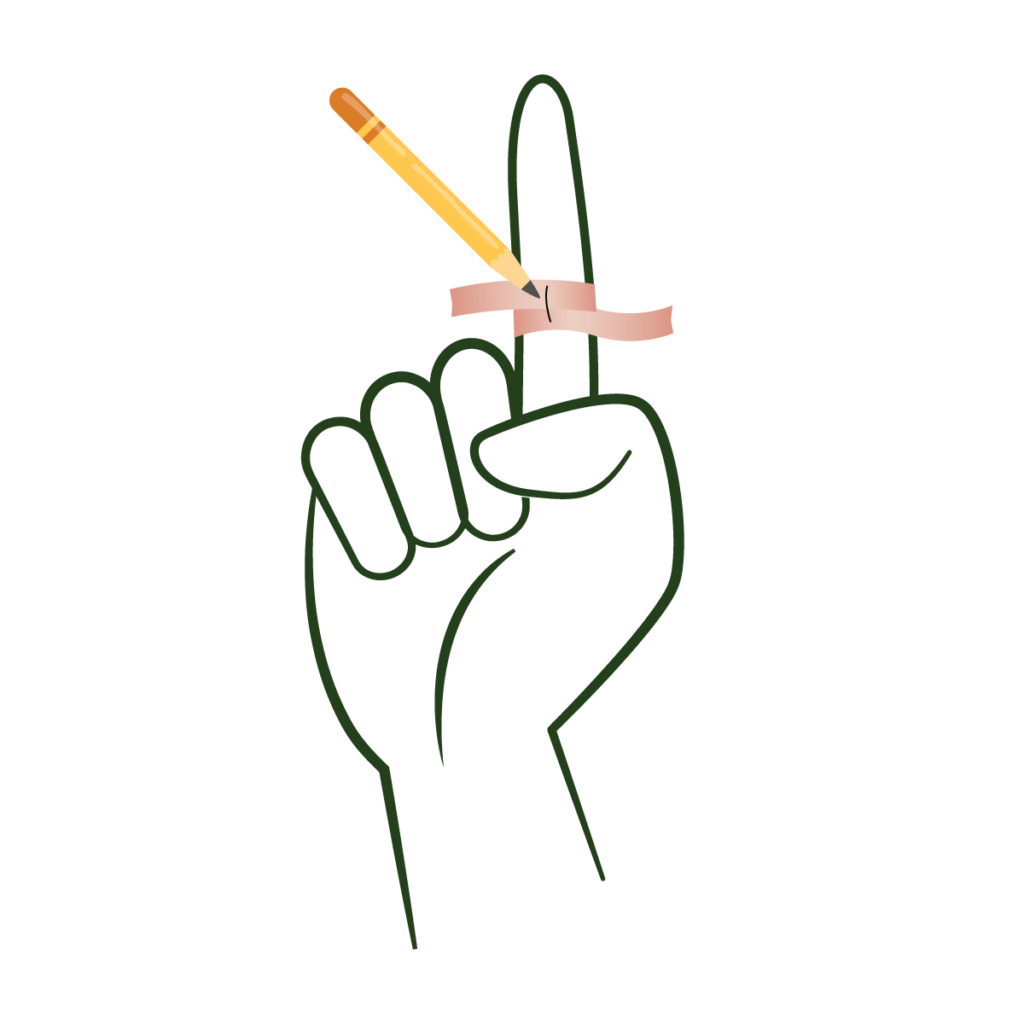
Measuring your ring size at home is simple. Here’s how you can do it
- Gather Your Tools: You’ll need a tape measure, a piece of string or a strip of paper, a pen or marker, and a ruler.
- Wrap Around Your Finger
– Wrap the string or paper around the finger where you’ll wear the ring.
– If you’re planning to stack rings, consider where on your finger the ring will sit.
- Mark the Spot
– Mark the point where the string or paper meets around your finger with the pen or marker. - Measure the Length
– Lay the string or paper flat on a surface.
– Use the ruler to measure the length from the start to the marked point in millimeters. - Find Your Size
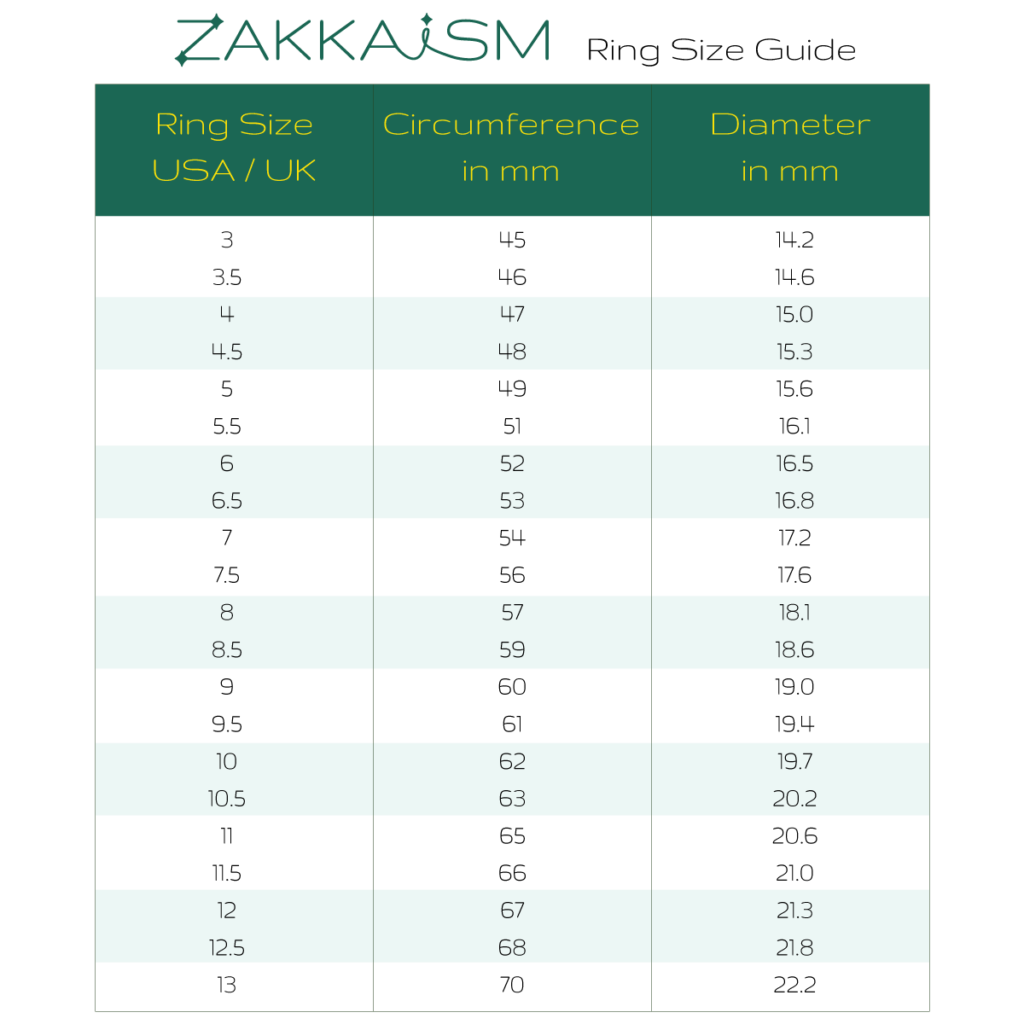
– Compare your measurement with a ring size chart to find your perfect size. Most charts convert millimeters to standard ring sizes.
Tips for Accuracy
– Measure your finger at the end of the day when it’s likely to be largest.
– Ensure your finger is at a normal temperature; cold fingers can be smaller, and hot fingers can be larger.
– If your knuckle is much larger than the base of your finger, measure both and choose a size in between.
By following these steps, you can accurately determine your ring size at home.
How to Measure Your Ring Size Using an Existing Ring

If you already have a ring that fits well, you can use it to determine your ring size with these simple steps:
- Gather Your Tools
– A ruler or a caliper
– A ring size chart or online ring size guide - Measure the Diameter
– Place your ring on a flat surface.
– Using a ruler or caliper, measure the inside diameter of the ring from one inner edge directly across to the other inner edge. Ensure you are measuring the widest part of the ring for accuracy.
– Record the measurement in millimeters. - Find Your Size
– Compare the measured diameter to a ring size chart. Most charts provide the diameter in millimeters alongside the corresponding ring sizes.
– Find the size that matches your measurement most closely.
Example
– If the inside diameter of your ring is 16.5 mm, according to most ring size charts, this corresponds to a US size 6.
By following these steps, you can easily determine your ring size using an existing ring that fits you well.
How to Measure Your Bracelet Size by Yourself
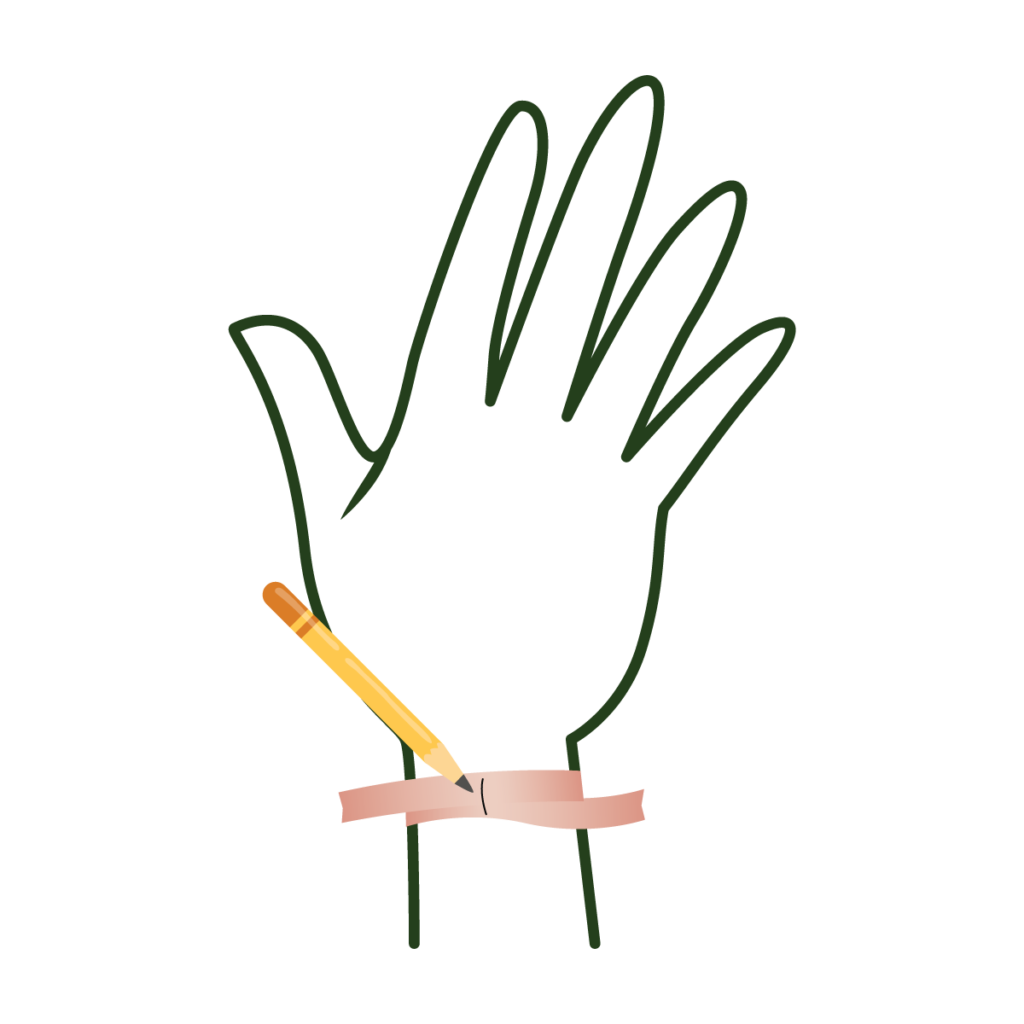
Measuring your bracelet size at home is easy. Follow these steps to find the perfect fit
- Gather Your Tools
– Flexible measuring tape or a strip of paper or string
– Pen or marker
– Ruler - Measure Your Wrist
– Wrap the measuring tape, string, or strip of paper around your wrist where you would normally wear the bracelet. Make sure it’s snug but not too tight.
– If you’re using a string or paper, mark the point where the ends meet. - Determine the Length
– Lay the string or paper flat on a surface.
– Use the ruler to measure the length from the start to the marked point in millimeters or inches. - Add Extra Length for Comfort
– For a snug fit, add 1/4 to 1/2 inch (about 0.6 to 1.3 cm) to your wrist measurement.
– For a comfortable fit, add 3/4 to 1 inch (about 1.9 to 2.5 cm) to your wrist measurement. - Find Your Bracelet Size
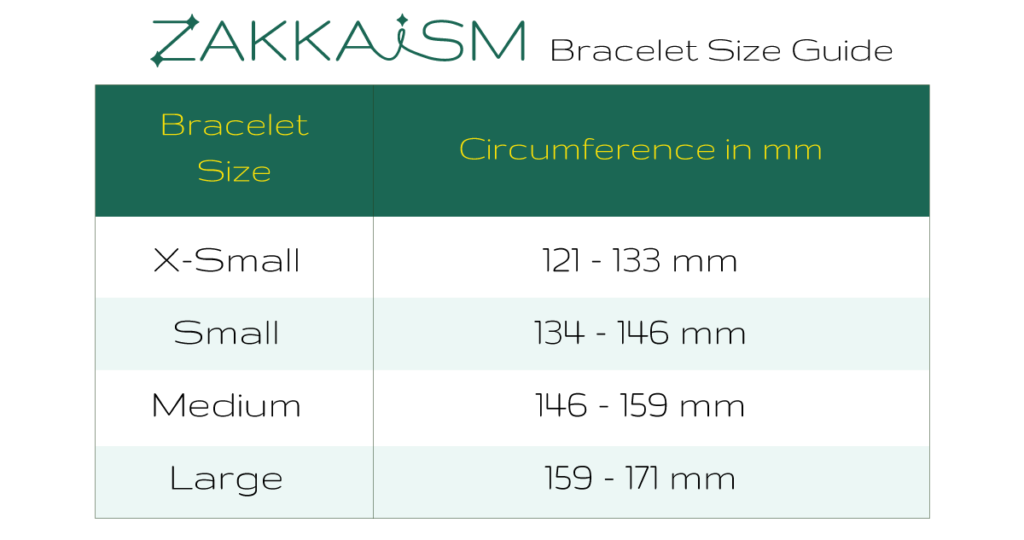
– Compare your final measurement with a bracelet size chart to find the size that best matches your measurement.
Example
– If your wrist measures 6 inches and you want a comfortable fit, add 1 inch. Your bracelet size would be 7 inches.
By following these steps, you can easily determine your bracelet size and ensure a perfect fit.
How to Measure Your Necklace Size by Yourself
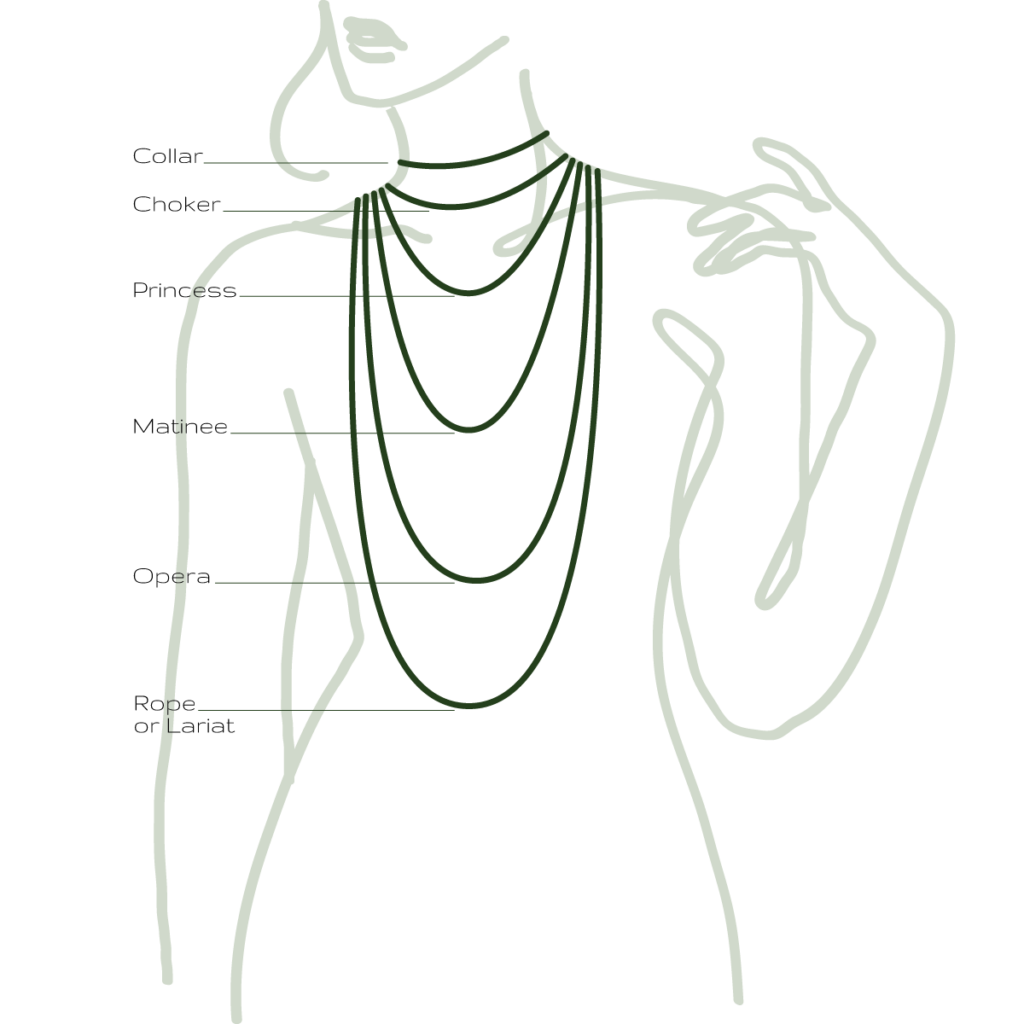
To find the perfect necklace length, follow these simple steps
- Gather Your Tools
– A flexible measuring tape or a piece of string
– A ruler (if using string)
– A mirror (optional, but helpful) - Decide on the Length
– Think about where you want the necklace to fall on your chest. Common lengths include
– Collar: 12-13 inches (30-35 cm)
– Choker: 14-16 inches (45 cm)
– Princess: 18 inches (45 cm)
– Matinee: 20-24 inches (50-60 cm)
– Opera: 28-36 inches (70-90 cm)
– Rope: Over 36 inches (90 cm) - Measure with Tape or String
→With Measuring Tape
– Wrap the measuring tape around your neck, letting it fall to your desired length. Check the measurement where the end meets the rest of the tape.
→With String
– Wrap the string around your neck, letting it hang to your desired length. Mark the string at this point. Lay the string flat and measure the marked length with a ruler. - Check in the Mirror
– If using string, you can double-check by holding it around your neck again and checking the length in a mirror to ensure it falls where you want it to. - Adjust for Different Styles
– Consider the type of necklace and its clasp. Some necklaces, like chains or beaded strands, may hang differently depending on the material and weight.
Example
– If you want a necklace that falls at the middle of your chest, you might choose a “Matinee” length of around 22 inches. Measure this length with your tape or string to see where it falls and adjust as needed.
By following these steps, you can accurately measure your perfect necklace length and ensure it complements your style and preference.
How to Measure Your Earrings Size by Yourself
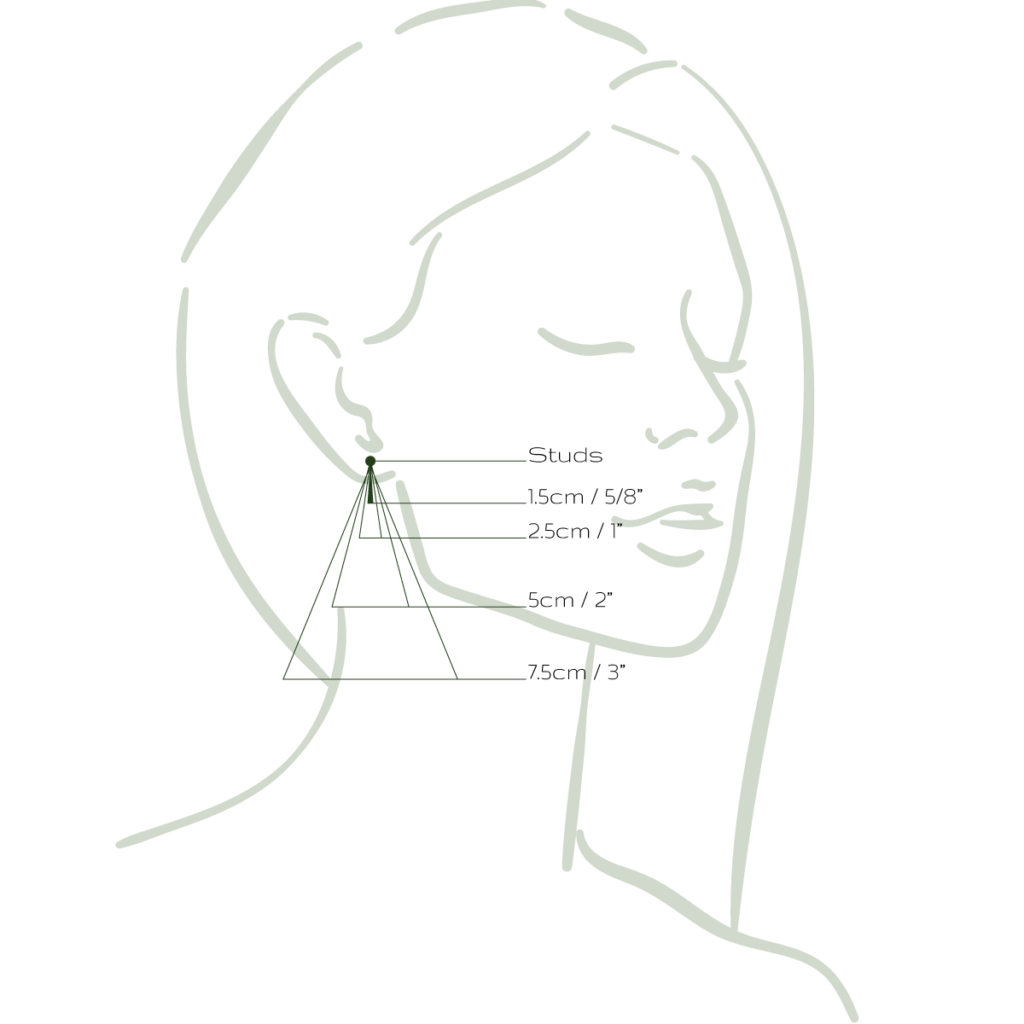
Measuring your earrings size at home is straightforward. Here’s how you can do it:
- Choose Your Earring Type: Decide whether you’re measuring studs, hoops, or dangly earrings. Each type may require a slightly different approach.
- Gather Your Tools: You’ll need a ruler or measuring tape.
- For Stud Earrings
– Place a ruler horizontally and measure the diameter of the earring’s front face from one edge to the other. This measurement represents the size of the earring.
– If you’re measuring the earring post, measure the length of the post from the base to the tip. - For Hoop Earrings
– Measure the diameter of the hoop from one outer edge to the opposite outer edge. This gives you the size of the hoop.
– If there are any decorative elements or charms attached to the hoop, measure their dimensions separately if needed. - For Dangly Earrings
– Measure the total length of the earring from the top of the hook or stud to the bottommost point of the earring. - Record Your Measurements Write down the measurements for each earring if you have multiple pairs.
- Consider Your Preferences Keep in mind your personal style and comfort preferences when choosing earring sizes. Some people prefer smaller, more understated earrings, while others may like larger, statement pieces.
By following these steps, you can accurately measure the size of your earrings and ensure they fit your style and preferences perfectly.